Die 5 effektivsten Supplements für Anfänger

The 5 Most Effective Supplements for Beginners

Anyone getting into fitness already has their hands full with proper training planning and correct nutrition. Sooner or later, however, the topic of dietary supplements comes up, which understandably raises even more questions. The biggest challenge now is to find the relevant and correct information for you so that you can decide, which supplements will help you progress and are considered a must-have, which ones can make your everyday life easier, and which ones you don't need. Then choosing from the wide variety of protein powders, pre-workout boosters, mass and diet products, and amino acids will be easier. After this guide, you will know which of the numerous supplements are really worth it for you as a beginner and which dietary supplements you should not spend money on at first.

First, the most important thing, which is often forgotten with the variety of dietary supplements: As the name suggests, dietary supplements are products that should complement, not replace, a balanced diet. So, as a beginner, you should first think about your diet before you rack your brain over performance-enhancing and muscle-building supplements.

This means a high-protein diet with at least 1.5 to 2 grams of protein per kilogram of body weight per day, plenty of fruit and vegetables, and generally high-quality, largely unprocessed foods. Once this foundation is laid, you can get even more out of yourself with the following sensible supplements.

Vitamin D - The Supplement for Muscle Building and Muscle Function

You are probably wondering what a vitamin is doing at number 1 on the list of the most effective supplements for beginners, and you probably expected protein powder here. The fact is, however, that over 80% are not sufficiently supplied with vitamin D[¹] and vitamin D is actually not a vitamin at all, but an important steroid hormone.

Vitamin D receptors are found almost everywhere in our body, which means that vitamin D is required for a very large number of processes - including muscle building. For example, several studies have found that low vitamin D levels – we remember that this applies to over 80% – are associated with poorer muscle function and that vitamin D supplementation very likely has a slight positive effect on muscle strength. This applies to everyone from adolescents to seniors! [²]

Another, even more important factor is the impact on the immune system. Because vitamin D supports the immune system, and low vitamin D levels weaken the immune system. A weak immune system ultimately means that you will be out of action more often with infections and thus, in the long run, spend less time training and therefore make significantly slower progress. [³]

In addition, vitamin D contributes to the maintenance of healthy bones through its function in the absorption and utilization of calcium and phosphorus.

VitaminD3_120Caps.jpg

Vitamin D3 Kapseln

Vitamin D3-Support für Knochen, Muskeln und Immunsystem

Jetzt Vitamin D Kapseln kaufen Jetzt Vitamin D Kapseln kaufen

Omega 3 for performance and fitness

Even in second place, you still won't find a typical supplement for fitness and strength athletes. This is because the same applies when prioritizing dietary supplements as it does with nutrition: first take care of the basics, which are often neglected even with a balanced diet, and then specifically address performance enhancement. After all, only a healthy body can perform. And omega 3 fatty acids play an important role in a healthy body.

The omega 3 fatty acids EPA and DHA contribute significantly to maintaining a healthy triglyceride concentration in our blood. It is important to know that a poor triglyceride concentration particularly promotes the development of inflammation and slows down healing. In old age, this is particularly often manifested through joint inflammation, in young years through a poor complexion. [4]

Considering that every workout, every muscle stimulus causes minor damage to various tissues, which triggers inflammatory reactions, and that the omega 3 index as well as the ratio to other fatty acids is suboptimal in the majority of the population in Western Europe [5], it becomes understandable that supplementation makes sense. Although local micro-inflammation is important for muscle building, as it initiates repair and construction processes, these should also heal as quickly as possible. And this works optimally with a healthy triglyceride concentration, which very often depends on omega 3 supply.

According to current scientific findings, athletes seem to benefit from an omega 3 supplement not only from a health perspective but also from an athletic perspective. [6]

» Buy ESN Super Omega-3 Capsules now


Protein powder - To support muscle building and maintain muscles

In third place is now the supplement that most people probably think of first when it comes to fitness, weight loss, or muscle building: protein powder. Proteins play a central role in muscle building and are also suitable for weight loss. On the one hand, they provide the important building blocks for muscle tissue, namely amino acids, and on the other hand, protein keeps you very full during a diet and ensures that the body does not tap into muscle reserves during a calorie deficit. That is why the International Society of Sports Nutrition also explicitly recommends a protein intake of 1.4 to 2.0 g per kilogram of body weight for athletes and even 2.3 to 3.1 g per kilogram during a diet. [7]

Why then is protein powder only in third place among the 5 most useful supplements for beginners? Quite simply, because unlike vitamin D and omega 3, you can realistically cover your protein needs through your diet. Of course, this is not exactly easy, not always particularly tasty, it restricts you, and requires meal planning. But it is possible. However, since it is often easier with protein powders, you should not unnecessarily make your daily life difficult when it comes to protein supply.

That is exactly why a good protein powder definitely belongs on a beginner's shelf. Because especially at the beginning, you struggle with protein supply. Protein powders are a very tasty and convenient, extremely versatile, and incredibly delicious way to meet your protein needs and get the necessary protein for muscle building and maintenance. Whether as a protein shake or as a flour substitute for delicious protein pancakes, muffins, cakes, or whatever other delicacies there are.

Which protein powder is right for you depends entirely on your diet. If you eat vegan, then a well-thought-out, plant-based multi-component protein powder is right for you. By combining different plant-based protein sources, a high biological value is achieved, which is in no way inferior to animal protein. If you also consume animal products, then a high-quality Whey Protein is the right choice for you. If you like it particularly creamy and long-lasting satiety, then you can also try a protein powder with casein.

» Buy ESN Protein Powder now


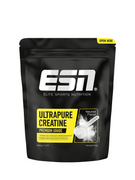
Creatine for optimal energy supply

You have probably heard of or read about creatine if you have been researching supplements in connection with fitness and strength training. This is not surprising, as it is the only dietary supplement that has been proven to have a significant strength-enhancing effect. In addition, it is one of the best-researched supplements of all. It is no wonder that the European Food Safety Authority has confirmed that daily intake of creatine can increase muscle strength. [8] And by 5 to 15%! [9]

Simply put, creatine replenishes the energy required for muscle work during intense, short-term exertion. It ensures that the limited energy providers can be regenerated in the form of ATP. This means you can do one or two more repetitions per set. Since training volume – i.e., the repetitions performed – is one of the key factors for successful muscle building, this also means more effective muscle building in the long term.

Since your body can only synthesize 1 to at most 2 grams per day and you can realistically only supply about 1 gram of creatine per day through your diet, you are not utilizing the full potential of creatine. The creatine requirement of normally active people is already 3 to 7 grams, which means that at best you are just covering the minimum requirement. Sports-active people naturally need more due to the increased consumption, which is why a creatine supplement also offers a lot of potential for beginners.

In connection with creatine, myths often arise that it makes you bloated and that taking it would reduce your body's own production. That is why you should take creatine for a maximum of a few weeks. The first myth stems from the fact that creatine binds water in the body. However, creatine is stored in the muscles and not under the skin. Therefore, you do not get bloated, but the muscles become slightly fuller. The second myth is completely untrue. It is true that the body's own production is reduced if enough is supplied through food, but it is also immediately stimulated again if too little creatine is taken. That is why the current state of science is that creatine should be taken continuously. [10]
L-Citrulline / L-Arginine for muscle pump, blood flow and metabolism

Two amino acids take the last place in our 5 most effective supplements for beginners. Namely citrulline and arginine. Why both together? Because they work similarly. Both citrulline and arginine play a role in nitric oxide production, also known as NO synthase. Simply put, citrulline is the precursor to arginine. Since citrulline works more slowly but more effectively, and arginine is quickly available but suffers quite high metabolic losses, it makes sense to combine the two.

You are probably wondering what nitric oxide production has to do with your training. An increased nitric oxide concentration in the blood has two effects in terms of training. The first is more visual in nature, because nitric oxide causes the blood vessels to dilate. This makes them stand out more and the muscles become more blood-filled. This visual effect is often referred to as a muscle pump.

In addition to the appearance, the whole thing also has another advantage. Through improved blood flow, the nutrient supply and the removal of metabolic products become more efficient, which can have a positive effect on muscle endurance and recovery during and after training. Beginners in particular seem to benefit especially from citrulline and arginine. [¹¹],[¹²],[¹³]


What beginners do not necessarily need yet

Of course, there are still a lot of useful supplements. However, these should only be added as training progresses and performance increases, as they can only reach their full potential then. A very good example is EAAs. The supplementation of essential amino acids is useful and effective under certain circumstances. Especially during hard diets or hard training phases. However, as a beginner, you will very likely not enter these extreme areas yet.

If you are unsure and still have questions, please contact our experts. We are happy to help!

[1] Max-Rubner Institute (Ed.). National Dietary Survey II. Results Report Part 1. The nationwide survey on the nutrition of adolescents and adults. Max-Rubner Institute, Karlsruhe. 2008.

[2] Halfon M, Phan O, Teta D. Vitamin D: a review on its effects on muscle strength, the risk of fall, and frailty. Biomed Res Int. 2015;2015:953241. doi: 10.1155/2015/953241. Epub 2015 Apr 27. PMID: 26000306; PMCID: PMC4427016.

[3] Aranow C. Vitamin D and the immune system. J Investig Med. 2011 Aug;59(6):881-6. doi: 10.2310/JIM.0b013e31821b8755. PMID: 21527855; PMCID: PMC3166406.

[4] Calder PC. Omega-3 fatty acids and inflammatory processes. Nutrients. 2010 Mar;2(3):355-74. doi: 10.3390/nu2030355. Epub 2010 Mar 18. PMID: 22254027; PMCID: PMC3257651.

[5] von Schacky, C. Confusion about the effects of omega-3 fatty acids. Internist 60, 1319–1327 (2019). doi: 10.1007/s00108-019-00687-x

[6] Thielecke F, Blannin A. Omega-3 Fatty Acids for Sport Performance-Are They Equally Beneficial for Athletes and Amateurs? A Narrative Review. Nutrients. 2020 Nov 30;12(12):3712. doi: 10.3390/nu12123712. PMID: 33266318; PMCID: PMC7760705.

[7] Jäger R, Kerksick CM, Campbell BI, Cribb PJ, Wells SD, Skwiat TM, Purpura M, Ziegenfuss TN, Ferrando AA, Arent SM, Smith-Ryan AE, Stout JR, Arciero PJ, Ormsbee MJ, Taylor LW, Wilborn CD, Kalman DS, Kreider RB, Willoughby DS, Hoffman JR, Krzykowski JL, Antonio J. International Society of Sports Nutrition Position Stand: protein and exercise. J Int Soc Sports Nutr. 2017 Jun 20;14:20. doi: 10.1186/s12970-017-0177-8. PMID: 28642676; PMCID: PMC5477153.

[8] https://doi.org/10.2903/j.efsa.2016.4400

[9] Kreider, R. B. (2003). Effects of creatine supplementation on performance and training adaptations. Mol Cell Biochem. 244(1-2):89-94. PMID:12701815

[10] Kreider RB, Kalman DS, Antonio J, Ziegenfuss TN, Wildman R, Collins R, Candow DG, Kleiner SM, Almada AL, Lopez HL. International Society of Sports Nutrition position stand: safety and efficacy of creatine supplementation in exercise, sport, and medicine. J Int Soc Sports Nutr. 2017 Jun 13;14:18. doi: 10.1186/s12970-017-0173-z. PMID: 28615996; PMCID: PMC5469049.

[11] Rhim HC, Kim SJ, Park J, Jang KM. Effect of citrulline on post-exercise rating of perceived exertion, muscle soreness, and blood lactate levels: A systematic review and meta-analysis. J Sport Health Sci. 2020 Dec;9(6):553-561. doi: 10.1016/j.jshs.2020.02.003. Epub 2020 Feb 8. PMID: 33308806; PMCID: PMC7749242.

[12] Sureda A, Pons A. Arginine and citrulline supplementation in sports and exercise: ergogenic nutrients? Med Sport Sci. 2012;59:18-28. doi: 10.1159/000341937. Epub 2012 Oct 15. PMID: 23075551.

[13] Pérez-Guisado J, Jakeman PM. Citrulline malate enhances athletic anaerobic performance and relieves muscle soreness. J Strength Cond Res. 2010 May;24(5):1215-22. doi: 10.1519/JSC.0b013e3181cb28e0. PMID: 20386132.